
Introduction: The Dawn of Mind-Controlled Play
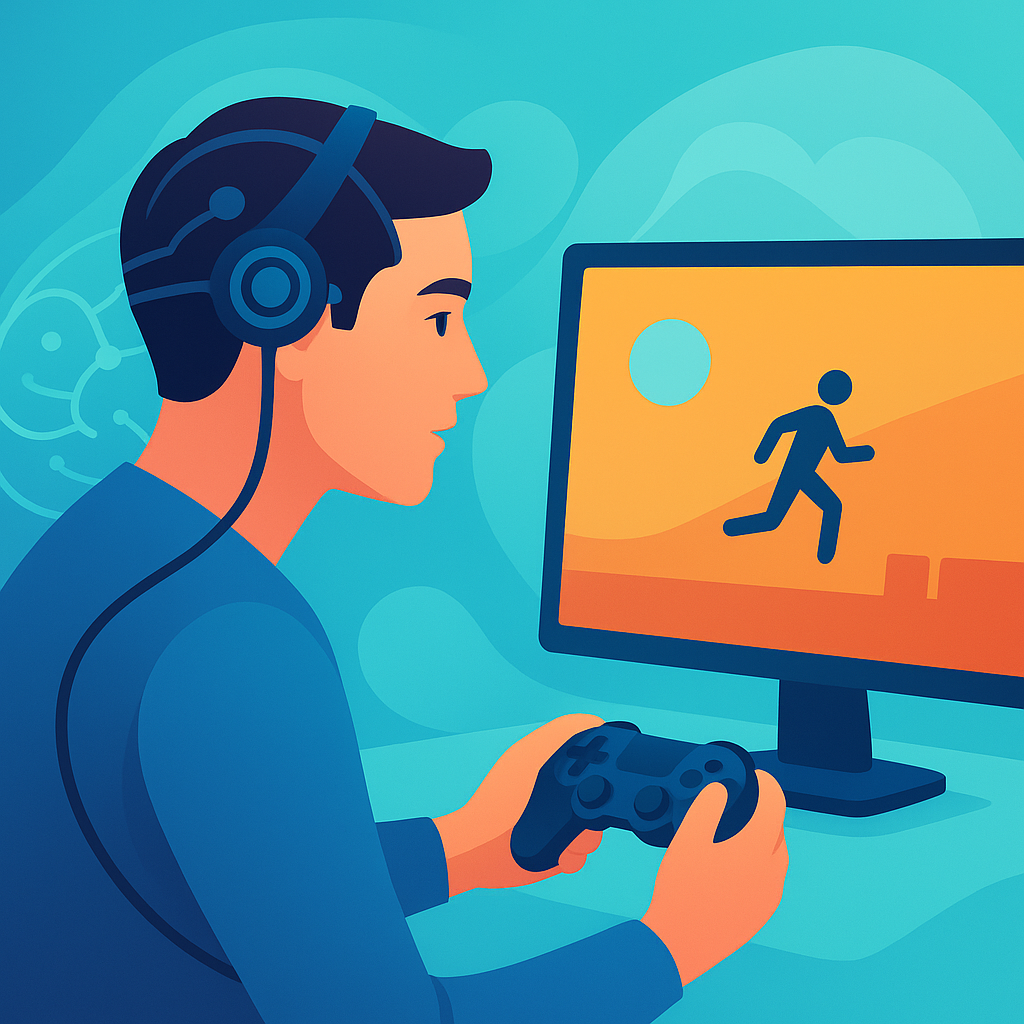
Imagine a world where you don't just press buttons to play a game—you think, and the game responds. Your character dodges a bullet because you sensed danger. Your spaceship accelerates because you focused on speed. This isn't science fiction anymore. It's the reality of brain-computer interface gaming, and it's transforming how we play and train.
I remember the first time I strapped on an EEG gaming headset. It felt like stepping into the future. The headset, a sleek band of sensors, rested against my scalp. I launched a simple cognitive training game where I had to levitate a ball by staying calm. Every time my mind wandered, the ball dropped. Every time I focused, it rose. It was exhausting, exhilarating, and utterly addictive. That experience taught me something profound: our brains are the most powerful controllers we'll ever own.
In this article, I'll walk you through exactly how to integrate brain-computer interfaces for gaming and training. Whether you're a gamer looking for an edge, a trainer seeking new methods, or just curious about neural interface gaming, this guide is for you. Let's dive into the world where thought becomes action.
What is Brain-Computer Interface Gaming?
Before we jump into integration, let's clarify what we're talking about. Brain-computer interface gaming uses technology to read electrical signals from your brain—primarily through EEG (electroencephalography)—and translate them into commands for a game or training application.
Think of it as a direct communication line between your mind and the machine. No keyboard. No mouse. No controller. Just pure neural intention.
Key Components You'll Need
- EEG Gaming Headset: This is your primary hardware. Devices like the NeuroSky MindWave, Emotiv EPOC+, or Muse headband capture brainwave data.
- Compatible Software: Games and training apps designed to interpret EEG signals. Examples include "Throw Trucks with Your Mind," "MindMaze," and various neurofeedback platforms.
- Calibration Tools: Most systems require a short calibration session to map your baseline brain activity.
- Training Modules: For cognitive training games, you'll need software that adapts to your performance and challenges your focus, relaxation, or mental imagery.
Step 1: Choose Your Hardware Wisely
Your journey into brain-controlled gaming starts with selecting the right EEG gaming headset. Not all headsets are created equal. Some are designed for casual gaming, while others are built for professional neurofeedback training.
For beginners: The NeuroSky MindWave is affordable and works with many basic games. It measures attention and meditation levels, making it perfect for simple cognitive training games.
For enthusiasts: The Emotiv EPOC+ offers 14 channels of data, allowing for more complex commands like facial expressions and mental commands. It's ideal for neural interface gaming where you want to control multiple actions.
For trainers: The Muse headband is excellent for meditation and focus training. Its companion apps provide detailed feedback on brain activity, making it a powerful tool for BCI training applications.
Step 2: Set Up Your Environment
BCI technology is sensitive. Your environment matters. Here's how to set up for success:
- Find a quiet space: Background noise and distractions interfere with brainwave readings.
- Minimize electrical interference: Turn off nearby electronics that might create electromagnetic noise.
- Position the headset correctly: Most headsets require the sensors to touch your scalp. Ensure proper contact by adjusting the headset and applying conductive gel if needed.
- Stay still: Physical movement creates muscle artifacts that confuse the EEG signal. Practice keeping your body relaxed while your mind works.
Step 3: Calibrate Your Brain
Calibration is the most critical step in integrating brain-computer interfaces for gaming and training. During calibration, the software learns your unique brainwave patterns.
You'll typically be asked to perform specific mental tasks: focus on an object, relax your mind, or imagine a movement. The system records your baseline for each state. This baseline becomes the reference point for all future commands.
Pro tip: Don't rush calibration. The more accurate your baseline, the better your gaming experience. If you're tired or distracted, reschedule. Your brain state during calibration sets the stage for everything that follows.
Step 4: Start with Cognitive Training Games
Once calibrated, begin with cognitive training games designed for BCI. These games are specifically built to train attention, relaxation, and mental flexibility.
Recommended Games and Apps
- "Throw Trucks with Your Mind": A classic where you lift and throw objects using focus. Great for learning the basics of neurofeedback gaming.
- "MindMaze": A virtual reality platform that combines BCI with VR for immersive training.
- "Focus Pocus": A simple game where you control a character's speed with your attention level.
- "BrainWave": A meditation game that rewards calmness with beautiful visuals.
These games provide immediate feedback. When you focus, the game responds. When you relax, the environment changes. This real-time feedback is the essence of neurofeedback gaming—you're literally training your brain while having fun.
Step 5: Advance to Neural Interface Gaming
After mastering basic cognitive training games, you can move to more complex neural interface gaming. These applications allow you to control multiple aspects of a game using different mental states.
For example, you might use focus to aim, relaxation to reload, and a mental command (like imagining a push) to fire. Advanced systems like the Emotiv EPOC+ can detect up to 13 different mental commands, giving you a rich vocabulary of brain-controlled actions.
Training tip: Practice one command at a time. Master "focus" before adding "relaxation." Layer commands slowly. Your brain needs time to associate specific mental states with specific game actions.
Step 6: Apply BCI for Professional Training
BCI training applications extend far beyond gaming. Professionals use these systems for:
- Athletic performance: Training focus and flow states for peak performance.
- ADHD management: Neurofeedback protocols that improve attention and impulse control.
- Stress reduction: Learning to enter calm states on demand.
- Memory enhancement: Games that challenge working memory and recall.
- Rehabilitation: Helping stroke patients regain motor control through mental imagery.
The same technology that helps you throw trucks with your mind can help you ace an exam, nail a presentation, or sink a game-winning shot.
Step 7: Track Your Progress
Integration isn't a one-time event. It's a journey. Track your progress using the software's built-in analytics. Most BCI platforms provide dashboards showing your attention levels, relaxation states, and improvement over time.
Look for patterns. Do you focus better in the morning? Does meditation before gaming improve your scores? Use this data to optimize your training schedule.
Conclusion: Your Brain, Your Controller
Integrating brain-computer interfaces for gaming and training is more than a technical process—it's a personal transformation. You learn to understand your own mind in ways you never thought possible. Every game becomes a mirror, reflecting your mental state back at you.
The steps are clear: choose your hardware, set up your environment, calibrate carefully, start with cognitive training games, advance to neural interface gaming, apply BCI for professional training, and track your progress. But the real magic happens when you stop thinking about the technology and start experiencing the flow.
I still remember that first moment when the ball rose because I focused. It felt like discovering a superpower. And in many ways, it is. Your brain is the most sophisticated computer ever created. With BCI, you finally have the interface to match.
So go ahead. Strap on that EEG gaming headset. Calibrate your mind. And step into a world where your thoughts control the game. The future of play is here, and it's inside your head.
Frequently Asked Questions
1. Is brain-computer interface gaming safe?
Yes, BCI gaming is safe. EEG headsets are non-invasive—they only read electrical signals from your scalp. They do not send
Frequently Asked Questions
What is Integrate Brain-Computer Interfaces for Gaming and Training?
Integrate Brain-Computer Interfaces for Gaming and Training refers to the process of learning and implementing effective strategies to achieve your goals in this area.
How long does it take to learn Integrate Brain-Computer Interfaces for Gaming and Training?
The time required varies depending on your dedication and prior experience, but most people see results within 2-4 weeks of consistent effort.
Do I need special skills to start?
No, beginners can start with basic knowledge and gradually build their expertise through practice and learning.